
Readable screens, open blinds
Glare Reduction Window Film in Jacksonville Homes
Glare is the complaint people make right after heat. In Jacksonville it often comes from water: the river at sunset, the ocean at breakfast, the pool in the backyard. Glare reduction film tones that light down so the room is usable with the blinds up.
 Jacksonville
Where Window Glare Comes From in Jacksonville Houses
Direct sun is only part of it. A lot of the harsh light in First Coast houses is reflected. The St. Johns is more than a mile wide in places, and on a clear afternoon it throws a sheet of light into every west-facing room along the bank in Mandarin, San Marco and Ortega. Oceanfront houses and condos take the same treatment from the east in the morning. Pools, lakes, retention ponds, white concrete patios and pale sand do it on a smaller scale.
Reflected light arrives at low angles, under roof overhangs and porch ceilings that block the high summer sun. That is why a room can be well shaded and still painfully bright, and why the TV on the inside wall becomes a mirror at a certain hour every day.
Glare Reduction Film for TVs, Home Offices and Kitchens
Media rooms and living rooms with a TV opposite the glass are the classic case. So are home offices, which many Jacksonville households added in spare bedrooms that were never meant for screen work. A laptop by a bright window strains the eyes, and closing the blinds turns the room into a cave.
Glare film trims how much visible light passes the pane, and that reduction takes the edge off contrast between the bright window and the darker room. Screens become readable again. Kitchens with big windows over the sink, where the morning sun bounces off countertops, are another frequent request.
Choosing a Glare Film Darkness for River and Beach Views
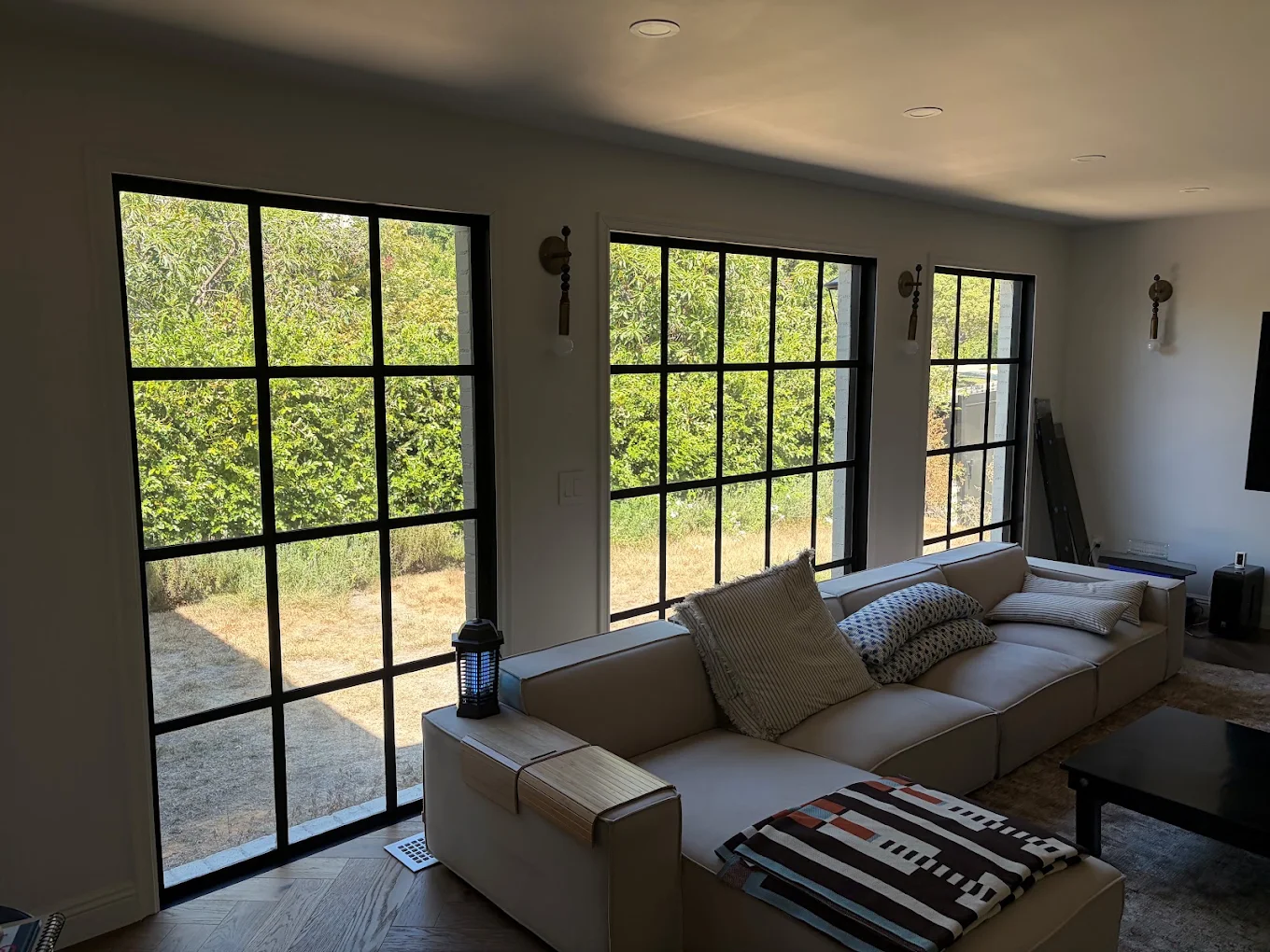
The trade-off is simple: more glare control means a darker view. For a room with a great river or ocean view, we usually start with a neutral film that cuts visible light moderately and keeps colors true. The view looks like a slightly overcast day rather than a tinted car window. Rooms with severe reflected glare, or where the owner cares more about the screen than the view, can go darker.
Reflective films control glare efficiently but look mirrored from outside in daylight, which some HOAs and condo boards will not accept. Neutral and dual-reflective films are the usual alternatives. A good test is to visit at the exact hour the trouble starts, with three or four swatches in hand, and let the owner sit in their usual chair while we swap them.
- Light neutral film for view rooms
- Medium film for home offices and TV rooms
- Darker or dual-reflective film for severe water glare
- Samples tested at the time of day glare is worst
Glare Film for Golf Course and Lake Homes Around Jacksonville
Deerwood, Ponte Vedra and many newer communities in Nocatee, St. Johns and Fleming Island are built around golf courses, lakes and stormwater ponds. Those water features look calm, but on a sunny afternoon they bounce light straight into the back of the house. Owners often notice it most in the great room, where the TV wall faces the yard.
Because most of these homes have newer low-E dual-pane glass, the film has to be approved for insulated units. We check the glass and the window maker's guidance, then select a glare film that works with it.
What Glare Reduction Film Changes in a Jacksonville Room
Readable TVs and Monitors Near Bright Windows
Lower contrast between window and room keeps screens readable when the sun or the water is bright. Movie night no longer depends on closing every blind, and the home office works at three in the afternoon. Video calls stop showing you as a dark silhouette against a white rectangle.
Glare Control Without Losing the View
Neutral films soften brightness while keeping colors close to natural. The river, the ocean or the fairway still looks like itself, just without the squint.
Less Eye Strain From Window Glare
Constant bright reflections cause fatigue and headaches for people who sit near the glass. Toning down the light makes reading, working and cooking more comfortable for hours at a stretch.
A Little Heat Relief From Glare Film Too
Cutting visible light also cuts some of the solar energy riding along with it, and the polyester screens out the bulk of ultraviolet. Rooms stay a bit cooler, and furniture near the windows fades more slowly.
Glare Window Film Questions in Jacksonville
How dark does glare film need to be?
As light as it can be while solving the problem. Mild glare often needs only a light film. Severe water glare or a TV directly opposite west glass may need something darker. Testing samples on site is the best way to decide.
Will glare film look mirrored from the street?
Only reflective types do. Neutral and dual-reflective films keep a more natural exterior appearance and are usually accepted by HOAs and condo boards.
Can I get glare film on just one window?
Yes. Many jobs are a single window behind or opposite a TV. If appearance from outside matters, we can match the look on other windows on the same side.
Does glare film work at night?
Glare is a daytime problem, so the film's effect at night is minimal. Neutral films do not create a strong mirror effect inside after dark.
Glare Reduction Window Film Service Areas in Jacksonville
Window film quote
Price Glare Reduction Film for Your Jacksonville Room
Note the hour the glare is worst and where it comes from: river, ocean, pool or plain sun. Put that in the quote form along with approximate window sizes, and we will suggest a shade.