
Sacrificial glass protection
Jacksonville Anti-Graffiti Film for Doors, Storefronts and Transit Glass
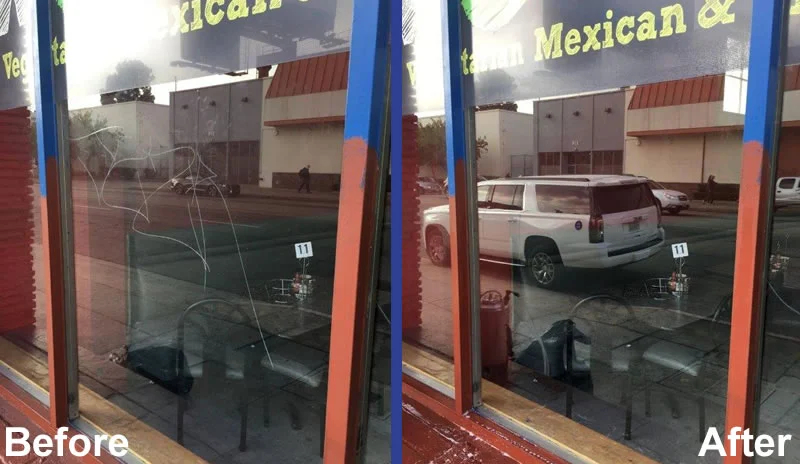
Scratched initials on a storefront door are cheap to make and expensive to remove, since the only real fix for etched glass is replacement. The film acts as a stand-in surface: vandals mark it, and you strip it off.
 Jacksonville
Glass Vandalism Around Jacksonville Storefronts
Graffiti on glass comes in a few forms. Marker and paint tags are the most visible, but scratch tagging, using a key, a rock or a diamond-tip tool, is the costly one because it permanently scores the surface. Acid etching creams leave a frosted mark that will not wash off. All three show up on downtown storefronts, around bus stops and transit stations, on restaurant doors along busy corridors and on the glass of parking garages and stairwells.
Once glass is scratched or etched, cleaning will not fix it. Polishing out shallow scratches is slow and often leaves distortion. Replacing a storefront panel costs much more than a film layer, and the new glass is just as vulnerable.
How Anti-Graffiti Film Protects Jacksonville Glass
The product is a tough, clear sheet with a scratch-resistant top coat, mounted on whichever face of the pane the public can reach. On a shop that means the sidewalk side. It looks like plain glass. When someone tags or scratches it, the scoring stops in the film and never reaches the pane underneath.
Spray paint and marker usually wipe off the top coat with a mild cleaner. Gouges and acid marks stay, and that is the signal to strip the panel and lay down a fresh one, a short job compared with ordering, removing and setting a new piece of storefront glass.
Where Anti-Graffiti Film Makes Sense in Jacksonville
Downtown storefronts on Laura, Adams and Forsyth streets, shops near the JTA bus hubs, restaurants and bars along Beach Boulevard and in the Jacksonville Beach entertainment blocks, and convenience stores on major roads all see repeat tagging. So do glass doors in parking garages, transit shelters and stairwell windows in multi-family buildings.
The film is most cost-effective on glass that gets hit more than once a year. If a door has been replaced twice for scratches, film usually pays for itself the next time someone takes a key to it.
- Storefront doors and lower display glass
- Elevator and lobby glass in garages
- Transit shelters and kiosks
- Restaurant and bar entries
- Mirrors and glass in public restrooms
Anti-Graffiti Film Maintenance and Replacement
Anti-graffiti film is a wear layer, not a permanent coating. It will need replacing when it collects enough damage, and outdoor film exposed to Jacksonville sun and rain has a shorter life than interior film. Many owners set aside a small stock of pre-cut panels for their most-hit doors. Keeping a log of when and where each pane is hit helps decide where film belongs next and how often to budget for replacement. Salt air near the beaches is one more reason exterior film on Jacksonville Beach and Atlantic Beach shops gets checked more often than the same product downtown.
Day-to-day cleaning uses mild soap and a soft squeegee. Harsh solvents and abrasive pads can damage the hard coat, so cleaning crews should be told which panes are filmed.
Combining Anti-Graffiti Film With Security or Solar Film
Glass that gets tagged often gets broken into too. Security film on the inside of the pane and anti-graffiti film on the outside cover both risks. On sunny storefronts, a solar film on the inside can be paired with an exterior anti-graffiti layer, keeping the shop cooler while protecting the outer surface.
We look at the glass, the frame and the history of damage before recommending a combination.
What Anti-Graffiti Film Saves Jacksonville Businesses
Replace Film Instead of Storefront Glass
Scratches and etching land on the film. Peeling and replacing a film panel costs far less than new glass and can be done quickly, often the same day.
Anti-Graffiti Film Looks Like Plain Glass
The film is clear and hard to see, so the storefront looks the same. Customers do not notice it until someone tries to tag the door.
Faster Graffiti Cleanup on Glass
Paint and marker clean off the film's hard coat more easily than many glass surfaces, and anything that will not clean off goes with the film when it is replaced.
Glass Protection for Repeat-Target Doors
Doors and windows hit more than once a year are where film earns its cost fastest. Owners stop budgeting for replacement glass on the same panes.
Anti-Graffiti Window Film Questions in Jacksonville
Is anti-graffiti film visible on the glass?
Barely. It is clear and thin, and it sits flat on the glass without the rainbow sheen some people expect. You may notice the edge at the frame if you look closely, but most people never do.
When does a tagged door need its film swapped?
It depends on how often the glass is attacked and the sun exposure. Heavily targeted doors may need new film more often; quieter panes last much longer.
Can paint be cleaned off anti-graffiti film?
Often, with mild cleaners. Deep scratches and etching cannot be cleaned off, so that piece of film is replaced.
Can anti-graffiti film go on the inside of glass?
It goes on whichever side gets attacked. For storefronts that is usually the outside. For lobby, restroom or interior glass it can be the inside.
Window film quote
Anti-Graffiti Film Pricing for Jacksonville Storefronts
Describe the damaged or at-risk glass in the quote form, with rough pane sizes, and note how often it gets hit. We will recommend a film and a replacement plan, and ask for pictures of the worst panes once we are in touch.