
Jacksonville window tinting
Jacksonville Window Film for Office Towers, Warehouses and Houses
Our crews put solar, security, privacy and decorative film on glass across the First Coast, from Southbank towers and Westside distribution buildings to Riverside bungalows and beach condos. Most jobs start with a building that runs hot on its sunny side.
Residential and commercial film · 20 neighborhoods and First Coast cities served · Quotes by online request
Window film in Jacksonville
Commercial Window Film for Jacksonville Offices, Warehouses and Medical Buildings
Jacksonville is a working city with a lot of glass in it. Downtown and the Southbank hold the towers. The Deerwood and Southside office parks hold regional operations centers for banks, insurers and tech firms. North of the river, the port and the I-295 corridor run on distribution buildings with glass office fronts bolted onto big concrete boxes. Add hospitals and outpatient clinics, hotels, city and county buildings, schools, and the retail strips on Beach, Atlantic and San Jose boulevards, and commercial glass is most of what we film.
The complaints repeat from building to building. West perimeter offices overheat after lunch. Lobby glass throws glare at the reception desk. A glass-walled meeting room shows every slide to the corridor. Ground-floor panes get smashed or keyed. Film deals with each of those from the inside of the glass that is already there, usually on nights or weekends, without new windows and without closing a floor.
Property managers receive product data sheets and physical samples for their approval file. Facility teams get a phased schedule built around tenants and shift changes. Owner-occupied buildings deal directly with us and whoever signs off on capital spending.
Typical upper ranges across residential and commercial film lines. Your numbers depend on the film and the glass, and we spec them before install.
Ask Which Film Fits →Jacksonville Window Tinting Steps, From Quote to Cured Film
Every quote starts with your windows, not a catalog. Here is how a Jacksonville install runs from quote request to finished glass.
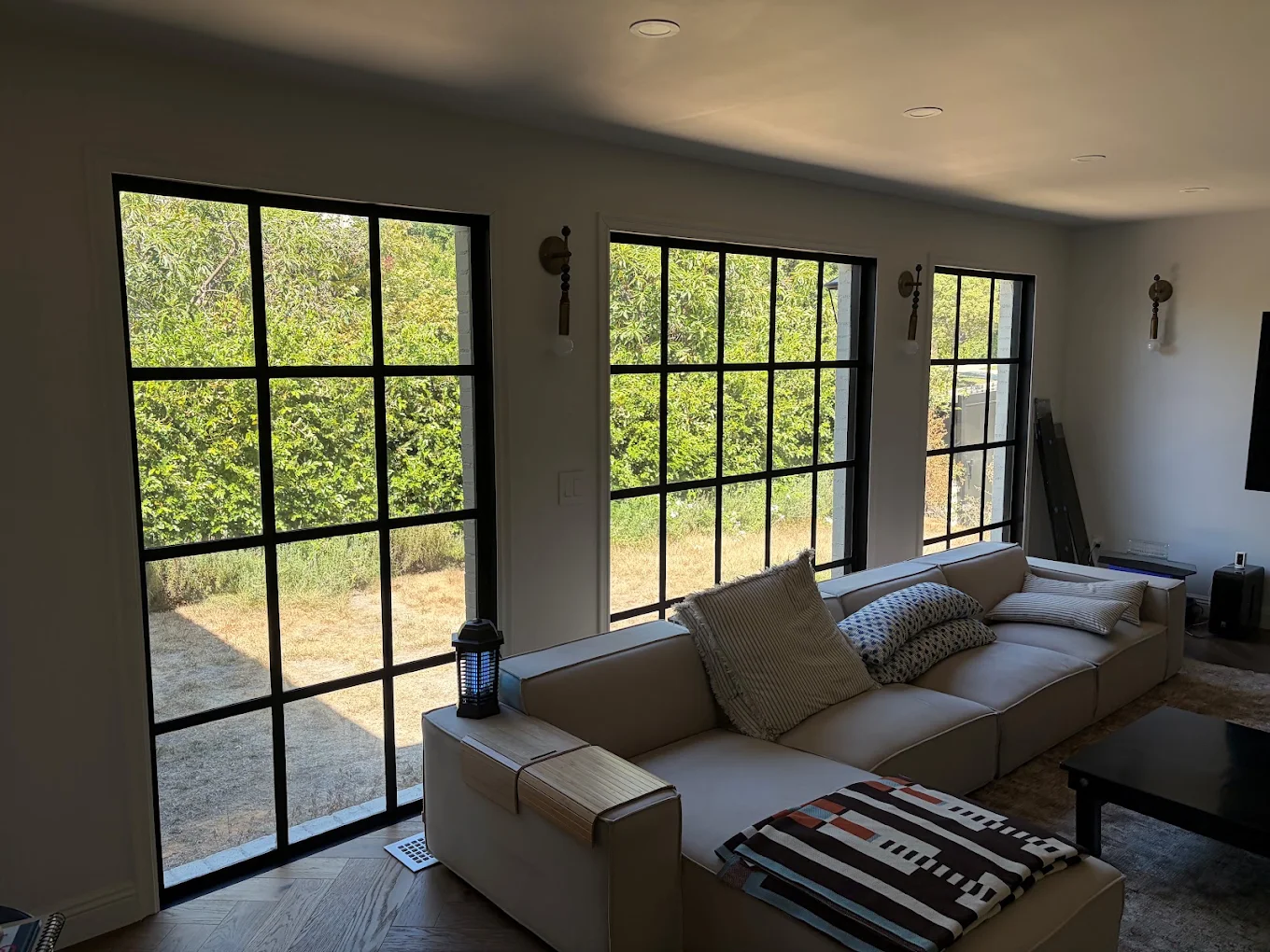
Jacksonville Window Film Quote From a Few Measurements
The quote form takes rough measurements, a count of the panes and a line about what is wrong: the hot conference room, the faded rug, the glass that faces the neighbor. Add the compass direction if you know it. Within a day you get a phone call or an email laying out a price range and the films that fit.
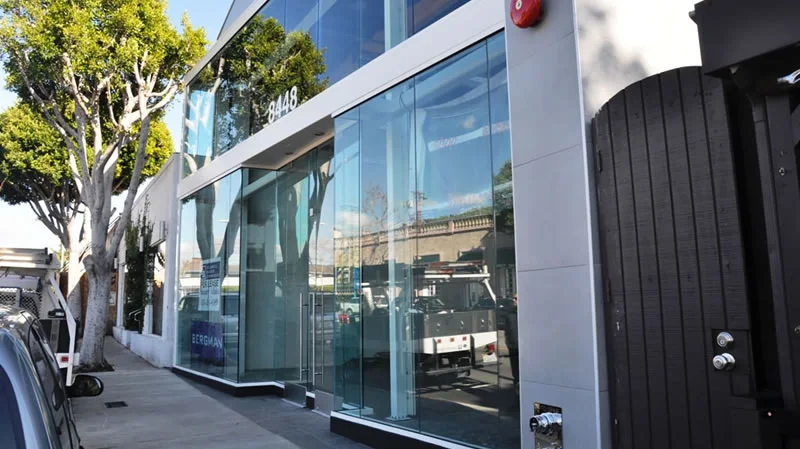
Glass Inspection and Film Samples on Your Windows
Bigger houses and nearly all commercial work get a site visit. We read the glass makeup, check for low-E coatings and fogged insulated units, and hold sample swatches up to the actual windows. Most people decide within minutes of seeing film against their own view of the river or parking lot.
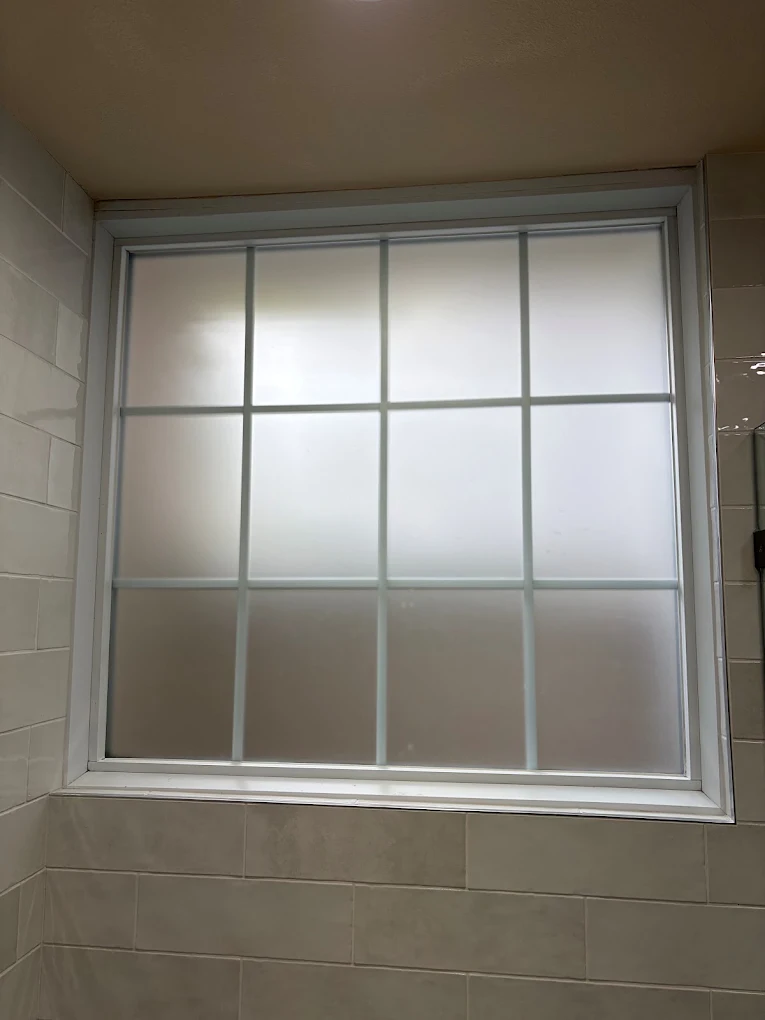
What Happens on a Jacksonville Window Film Install Day
Drop cloths go down, each pane is scraped and washed, and film is trimmed to the gasket and pressed out by hand. Most houses take a day. Offices and multi-floor buildings are phased by suite, floor or elevation, often after hours.
Window Film Drying Time in Florida Humidity
Film needs time for the leftover water under it to escape. Light haze or small pockets are normal for a while, and Jacksonville's damp months can stretch that out. Leave the filmed glass uncleaned until it clears.
How First Coast Sun and Humidity Shape Window Tinting in Jacksonville
Northeast Florida has a long, sticky cooling season. Summer highs sit in the low 90s for weeks at a time, the dew point stays high overnight, and the afternoon thunderstorm cools things off for an hour before the steam comes back. Air conditioners here are pulling moisture out of the air as well as heat, so every bit of solar energy that comes through a window lands on a system that is already working hard.
Water makes the glass problem bigger. The St. Johns River is wide where it bends through downtown, so offices and condos on both banks catch sunlight twice: once from the sky and again off the surface. Oceanfront buildings from Atlantic Beach to Ponte Vedra get the same effect from the Atlantic in the morning. In practice, west glass along the river and east glass at the beaches are where people complain first.
Winters are short and usually mild, with a few hard cold snaps most years. That makes heat rejection the main goal for nearly every building. Low-E film is worth a look on older single-pane glass, where warmth leaks out on January nights as easily as heat pours in during August.
Hurricane Season, Nor'easters and Security Window Film in Jacksonville
Jacksonville has rarely taken a direct hurricane landfall, but storms passing offshore or crossing the state still bring wind, river flooding and broken glass. Fall nor'easters add days of onshore wind and rain at the beaches. Owners reasonably ask what film can do about any of it, so here is where we draw the line.
Security film bonds to the inside face of the pane. When that pane breaks, the film keeps most of the pieces stuck together and cuts down on shards thrown into the room. That is the full extent of the claim. Film does not turn ordinary glass into impact-rated glass, it does not satisfy the Florida Building Code's storm protection requirements, and it is not a substitute for shutters, storm panels or impact windows. When a storm is on the way, put up the protection your building already depends on.
Film earns its keep against everyday breakage instead: a smash-and-grab at a storefront, a cart rolled into a door pane, a golf ball off a Ponte Vedra fairway, a limb knocked loose in a summer squall. Clear security film handles those risks without changing how the building looks from the street.
Window Film Rules in Jacksonville Historic Districts, HOAs and Condos
Riverside, Avondale and Springfield carry local historic designation, which means the city's preservation staff weigh in on visible exterior work. Interior film on existing glass rarely draws attention, but a mirrored or dark film that changes how a facade reads from the sidewalk can. We steer owners in those neighborhoods toward low-reflectance film and supply specifications when staff want to see them.
Outside the urban core, the rules come from associations. Nocatee, the St. Johns subdivisions and much of Fleming Island are governed by HOAs with architectural review. Oceanfront condos from Jacksonville Beach down to Ponte Vedra have boards that want every unit to look the same from the sand. St. Augustine's historic core has its own review for anything visible from the street. We work inside each of those rule sets, and we tell you before quoting if a film is likely to be refused.
Jacksonville service areas
Window Film Service Areas Across Jacksonville and the First Coast
Our crews cover the urban core on both sides of the St. Johns, the office parks off Butler Boulevard, the river suburbs to the south and the beach towns. Inland, we reach down into Clay County and the fast-growing parts of St. Johns County. Each area page describes the buildings, glass and sun exposure we usually find there, from Ortega river homes and Springfield Victorians to Deerwood office campuses, Nocatee new construction and the historic streets of St. Augustine and Fernandina Beach.
Window Tinting FAQs: Jacksonville Buildings and Houses
What decides the price of window film for a Jacksonville building?
Four things move the number: which film, how much glass, how many individual panes and what it takes to reach them. Forty small lites in a Springfield porch cost more to film than four big sliders in Mandarin, and a lift for a two-story atrium adds time. A few measurements and an honest pane count get you a real figure instead of a guess.
Can window film stand in for hurricane shutters in Jacksonville?
No. Security film keeps a broken pane from spraying shards across a room, yet it gives the window no impact rating or meet Florida Building Code storm requirements. Keep your shutters, panels or impact windows and use film for everyday breakage and break-in risk.
Will tinted windows make my office or house too dark?
Only if you want them to be. The near-clear spectrally selective films we use most often target infrared heat and let visible light through, so a room keeps its daylight. Darker and mirrored films reject more and dim more. Samples on your own windows make the tradeoff obvious.
Does window film void the warranty on dual-pane or impact windows?
Possibly. Window manufacturers write their own rules about aftermarket film, and insulated or laminated units are where those rules bite. On approved glass, the film manufacturer frequently steps in with its own glass coverage. We look up your glazing against the published compatibility charts before we suggest a product.
Is window film allowed in Riverside, Avondale or Springfield?
Interior film on existing windows is generally treated as a minor matter in Jacksonville's historic districts, especially low-reflectance film that barely shows from outside. Highly mirrored film is the kind most likely to be questioned. Confirm with the city's historic preservation staff if you are unsure, and we will provide specs.
How long does window film last on the First Coast?
Film applied on the inside of house and office glass usually stays in service for many years, with the exact term set by the manufacturer's warranty. Film on the outside takes sun, salt spray and rain head on and gives out sooner, so we seldom put it on beachside buildings. Ammonia-based glass sprays are the one thing to keep off it.
Do you install window film after business hours?
Yes. Most commercial work in Jacksonville happens in the evening, overnight or on weekends so staff and customers are not disturbed. Clinics and schools often book around patient schedules and breaks, and we phase larger buildings so the disruption stays confined to one corner of the building on any given night.
Window film quote
Request a Jacksonville Window Film Quote
Tell us about the building, the glass and what bothers you through the quote form, with sizes if you have them. If drawings or lease language affect the job, mention them; a First Coast installer will call or email to go over film choices for those offices or rooms and ask for anything else needed.